

Overview
Coding Agent is the part of CodeRabbit that writes code. It takes a request — typed by you, or raised by a CodeRabbit review finding, a failing check, a merge conflict, or a security finding — clones the repository into an isolated sandbox, works there, and shows you what it did. The results can be delivered as a direct commit or a stacked PR for a review. Find it in the sidebar under Code, or go directly to app.coderabbit.ai/code.Start a coding task
Choose a repository, write a request, and review the result before any changes reach your branch.
What a coding task is
Every agent run is a coding task: one durable unit of work bound to an organization, a repository, and either a pull request or a branch. A task has its own page, its own address, and its own history, so you can leave it, come back to it, and share it with a teammate.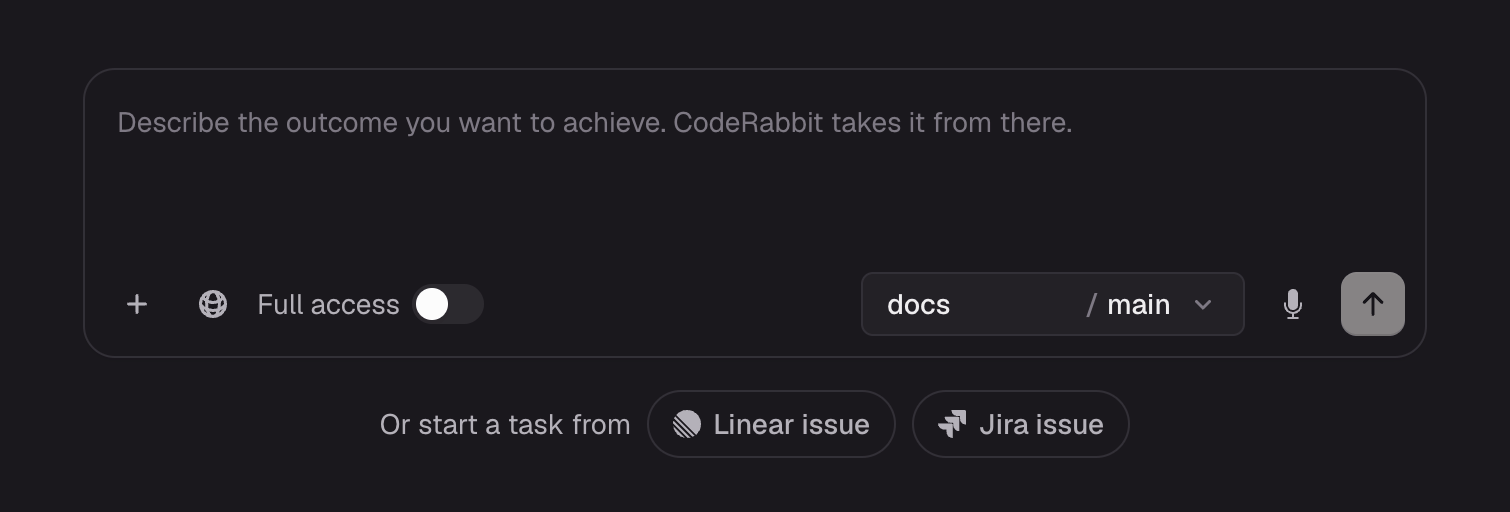
Starting a new coding task by describing the outcome, choosing a repository and branch, or starting from a Linear or Jira issue
- It works in its own sandbox. The task gets a prepared checkout of your repository. It does not act on your working copy. Changes reach the remote repository through the delivery workflow you choose. What that sandbox contains is configurable — see Coding environments.
- You choose how it delivers. Manual delivery produces a proposed patch: a diff you read, comment on, revise, reject, or accept. Where available, Autofix can publish the work and handle follow-up fixes automatically after you enable it.
- Repository permissions still apply. Manual delivery and Autofix normally use your Git provider authorization. See Who pushes, and who wrote it.
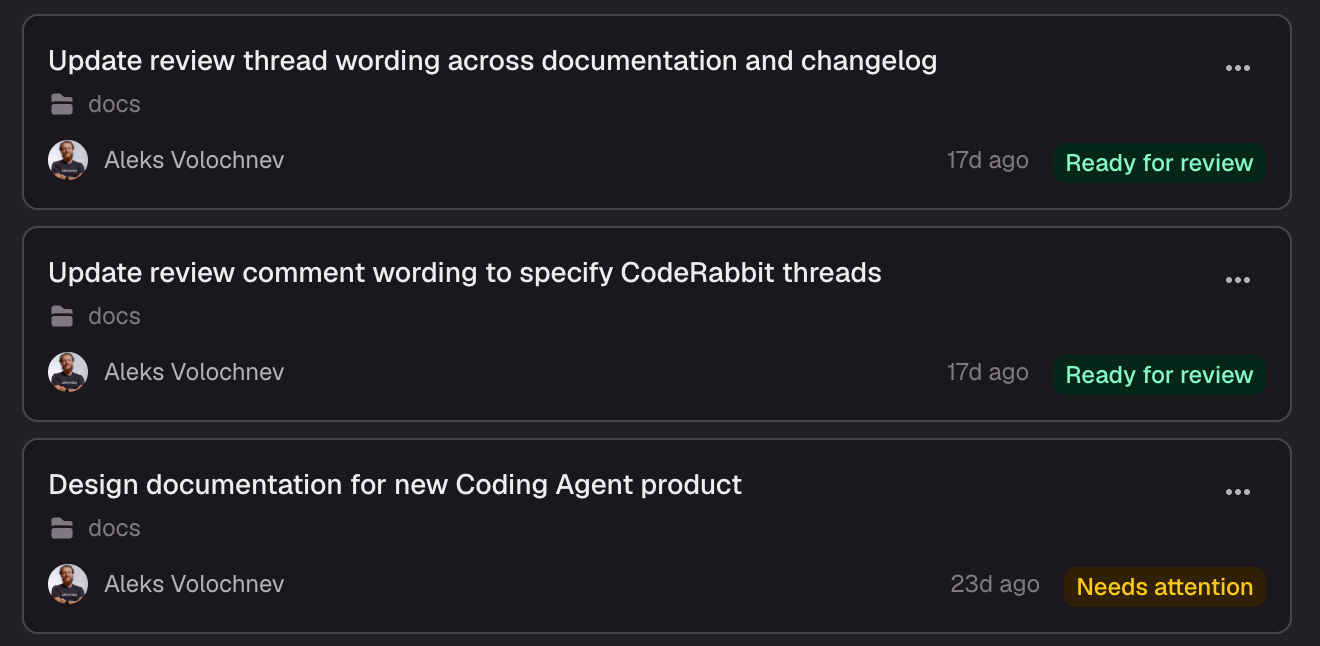
A list of coding tasks, each showing its title, repository, requester, age, and status
Lifecycle of a task
1
Start
A request enters from one of the starting points below. You choose whether the agent should write code directly or produce a reviewable plan first.
2
Work
The task prepares a sandbox and starts working, one turn at a time. A turn is a single run of the agent against one instruction; every message you send afterwards starts another one. You can watch the work, answer its questions, and steer it while it runs.
3
Review
The task produces a plan or code changes. You can discuss, revise, or approve a plan. With manual delivery, the code changes become a proposed patch that you can read, comment on, revise, reject, or accept. With Autofix, the changes are published without separate patch approval.
4
Deliver
Deliver the changes as a commit or a pull request. With manual delivery, you take this step after reviewing the work. If you enabled Autofix, it publishes the changes and follows the pull request through review and checks.
Where a task can start
See Start a coding task for what each one carries into the sandbox and which providers support it.
Code mode and Plan mode
Every task runs in one of two modes, chosen when you start it.
Plan mode puts a human approval gate in front of implementation. Once a plan is approved, the agent implements exactly what was approved. See Review a plan.
Reuse a skill
Choose a skill to give the task a repeatable procedure. Browse the catalog from the composer, or create private and organization skills under Code > Skills. A skill can guide the first request or a follow-up turn in an existing task.Collaboration
A task is visible to your team by default, so anyone in your organization can open it, follow its progress, and see its prompts, files, and activity. Mark a task private and only you can see it — including anyone who follows a direct link. Only the task’s author can change this, and it can be changed back at any time. Set this when you start a task, or switch it afterwards from the task page. See Control who can see a task.Names that collide
“Coding agent” means several things across this site and across the industry. These distinctions are worth knowing before you read further.What’s next
Start a coding task
Every way to start a task, what to write in a request, and where each starting point is available.
Work with a running task
Follow the work, steer it, answer its questions, and review its plan or patch.
Coding environments
Set up before you start: give your repositories a sandbox with the right toolchains and setup.